
 K
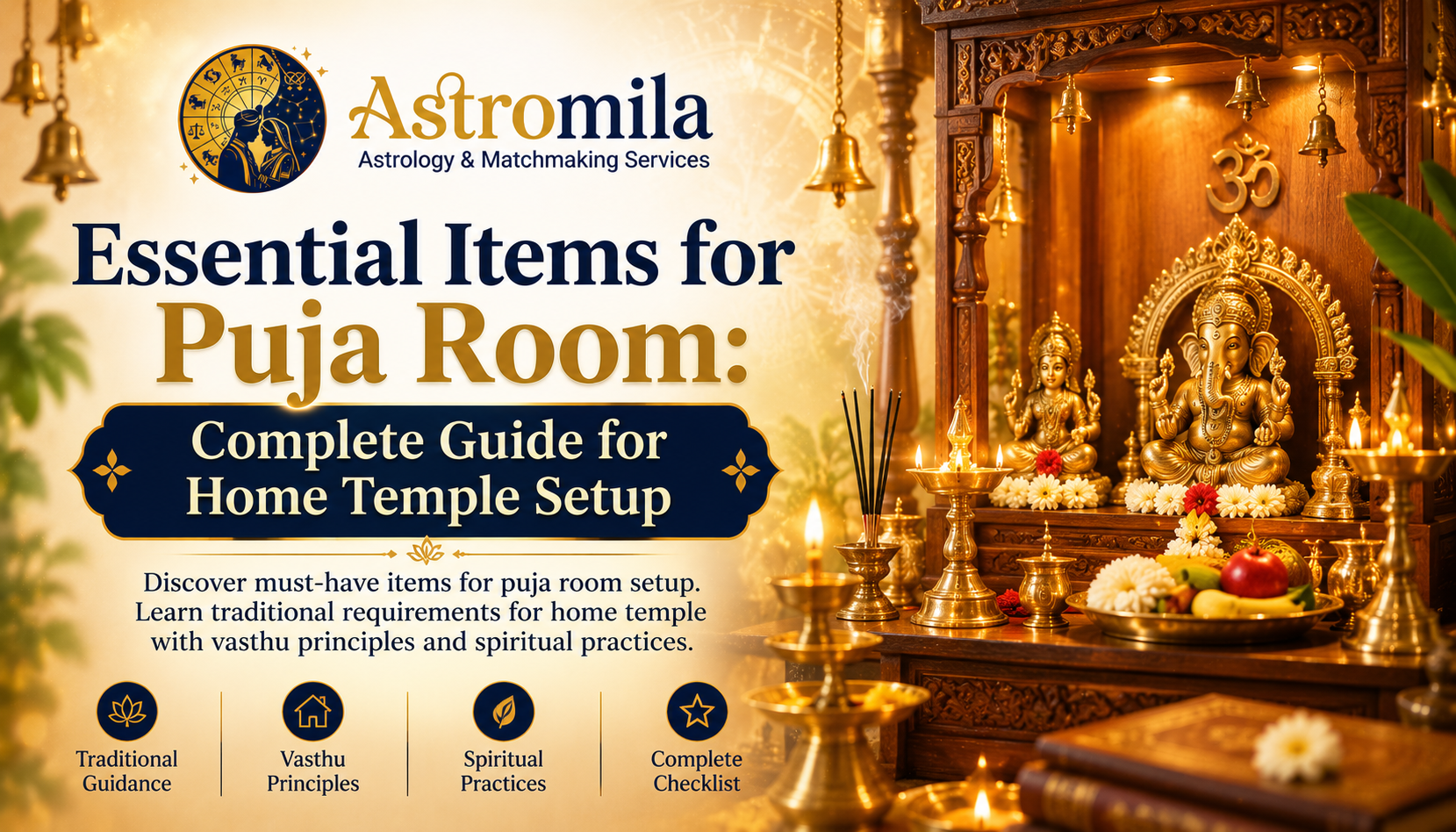
KEssential Items for Puja Room: Complete Guide for Home Temple Setup
Discover must-have items for puja room setup. Learn traditional requirements for home temple with vasthu principles and spiritual practices.
Pooja Arayil Thavaramal Irukkavendum Poruttangal — Essential Items That Must Always Be Present in Your Prayer Room
Introduction
A dedicated prayer room, known in Tamil households as the Pooja Arai, is far more than a physical space set aside for ritual. It is a sanctified domain where divine energy converges, where the householder connects with celestial forces, and where daily spiritual discipline is maintained. The items you keep in this sacred space carry tremendous significance in Tamil Jyotish and temple tradition. Whether you are setting up a new Pooja Arai or seeking to strengthen an existing one, understanding the essential items that belong in a prayer room is a matter of both spiritual authenticity and astrological alignment. This guide presents the most authoritative perspective on Pooja Arayil Thavaramal Irukkavendum Poruttangal, the objects that must never be absent from your sacred prayer space.
The Sacred Foundation — The Altar and Its Proper Setup
Every Pooja Arai must begin with a properly consecrated altar surface, ideally made of wood, stone, or copper. This elevated platform, often called a peetham, serves as the energetic foundation upon which all divine representations rest. The altar must face the east or the northeast direction, as these directions are governed by auspicious planetary and elemental forces in both Vastu Shastra and Tamil astrological tradition. Placing the altar in any other direction without expert guidance from a qualified Josiyar can disrupt the flow of positive energy throughout the home. The peetham should always be kept clean, free from dust, and covered with a fresh yellow or white cloth to honour the sanctity of the deities placed upon it.
Vigraham and Sacred Images — The Divine Representations
The most important items within any Pooja Arai are the sacred vigraham, meaning consecrated deity figures, and framed images of the deities you personally honour. In Tamil tradition, it is customary to keep vigraham made from copper, bronze, brass, or Panchaloha, the sacred five-metal alloy used in traditional temple sculpture. Avoid keeping broken or cracked deity figures in the prayer room, as damaged representations are considered inauspicious according to Tamil ritual texts. The images of your Kula Deivam, your ancestral deity, should always occupy a place of prominence on the altar. Alongside these, representations of Ganesha should always be placed first, as he is the remover of obstacles and the first deity to be invoked in all Tamil rituals.
Deepam and Lamps — The Eternal Symbol of Illumination
No Pooja Arai is considered complete or spiritually active without a lit Deepam, the sacred oil lamp. The lamp represents the divine light that dispels ignorance and invites auspicious planetary influences into the home. In Tamil tradition, sesame oil or pure ghee are the preferred fuels for lamps used in daily Pooja. A Karthigai Deepam or a traditional kuthu vilakku, the tall brass standing lamp, is considered especially auspicious and should be kept as a permanent fixture in the prayer room. The lamp must be lit at dawn during Brahma Muhurtham and again at dusk, ideally during Nalla Neram as identified through the Tamil Panchangam. Keeping the lamp burning consistently is a powerful act of devotion that activates the positive energy of the Pooja Arai throughout the day and night.
Pooja Samagri — The Essential Ritual Materials
Beyond the deity images and the lamp, a well-maintained Pooja Arai must contain a carefully curated collection of ritual materials known collectively as Pooja Samagri. These include fresh or dried flowers, particularly jasmine, lotus, and marigold, which are offered to the deities during daily worship. Kumkum and Vibhuti, sacred red powder and sacred ash respectively, are indispensable and must always be present in clean, sealed containers. Turmeric powder, sandalwood paste prepared fresh or from sandalwood powder, and unbroken raw rice known as akshata are offerings that hold deep significance in Tamil Agamic ritual. Incense sticks, known as agarbathi, and dhoop, the resin-based incense used for deeper purification, must also be kept stocked and easily accessible within the prayer room at all times.
Pancha Patra, Uddharini, and Copper Vessels
Tamil ritual tradition places immense importance on the vessels used during worship. The Pancha Patra is a small copper or silver cup used to hold sacred water, and the Uddharini is the accompanying ladle used to transfer water during Abhishekam and Achaman rites. These copper vessels should ideally be reserved exclusively for use within the Pooja Arai and should never be used for ordinary household purposes. A small copper or bronze water pot known as a kalasham, topped with a coconut and mango leaves, is traditionally placed during festival occasions and is a powerful symbol of divine presence. Keeping copper vessels in the prayer room is also supported by Vastu principles, as copper is known in classical texts to enhance the transmission of spiritual and planetary energies.
Panchangam, Sacred Texts, and the Josiyar's Guidance
A truly well-appointed Pooja Arai will also contain a current Tamil Panchangam, the traditional almanac that details auspicious timings, Muhurtham dates, and planetary positions for every day of the year. For the year 2026, consulting a reliable Tamil Panchangam is essential for identifying Nalla Neram for daily worship, festival dates within the Tamil calendar months from Thai through Margazhi, and auspicious planetary transits. Sacred texts such as the Thiruvasagam, Thevaram, or Thiruppavai may also be kept in the prayer room for daily recitation. If you require guidance on planetary placements affecting your household's spiritual practice or on which deities to honour based on your Jathagam, consulting a qualified Josiyar at Astromila.com will provide personalised and authoritative direction.
Frequently Asked Questions
Q1: Which direction should the Pooja Arai face in a Tamil home? The Pooja Arai should ideally face east or northeast, as these directions are considered most auspicious in both Vastu Shastra and Tamil astrological tradition. The worshipper should face east while performing Pooja.
Q2: Can we keep photographs of deceased ancestors in the Pooja Arai? In Tamil tradition, photographs of departed ancestors should generally not be placed on the main altar alongside deity vigraham. They may be kept separately in a designated, respectful space within the home.
Q3: How often should the Pooja Arai be cleaned? The prayer room should be cleaned every morning before worship begins. A thorough purification with fresh water, Vibhuti, and Kumkum should be performed at minimum on auspicious days and during Tamil festival months.
Q4: Is it necessary to keep a Tulasi plant near the Pooja Arai? Yes, a Tulasi plant placed near or adjacent to the Pooja Arai is considered highly auspicious in Tamil devotional tradition. It purifies the surrounding atmosphere and is associated with divine grace.
Q5: What should be avoided in the Pooja Arai? Avoid placing broken deity figures, faded or torn sacred images, non-devotional objects such as electronics or financial documents, and anything associated with impurity within the prayer room.
Conclusion
The Pooja Arai is the spiritual heart of a Tamil household, and maintaining it with the correct Pooja Arayil Thavaramal Irukkavendum Poruttangal ensures that divine energy flows continuously and powerfully through your home in 2026 and beyond. Every item discussed here — from the consecrated vigraham and the eternal Deepam to the Pancha Patra and the Tamil Panchangam — serves a precise spiritual and astrological function. For personalised guidance on your prayer room setup, your Jathagam-based deity worship, or identifying the most auspicious Muhurtham for consecration rituals, visit Astromila.com today and get insights on panchangam section.