 K
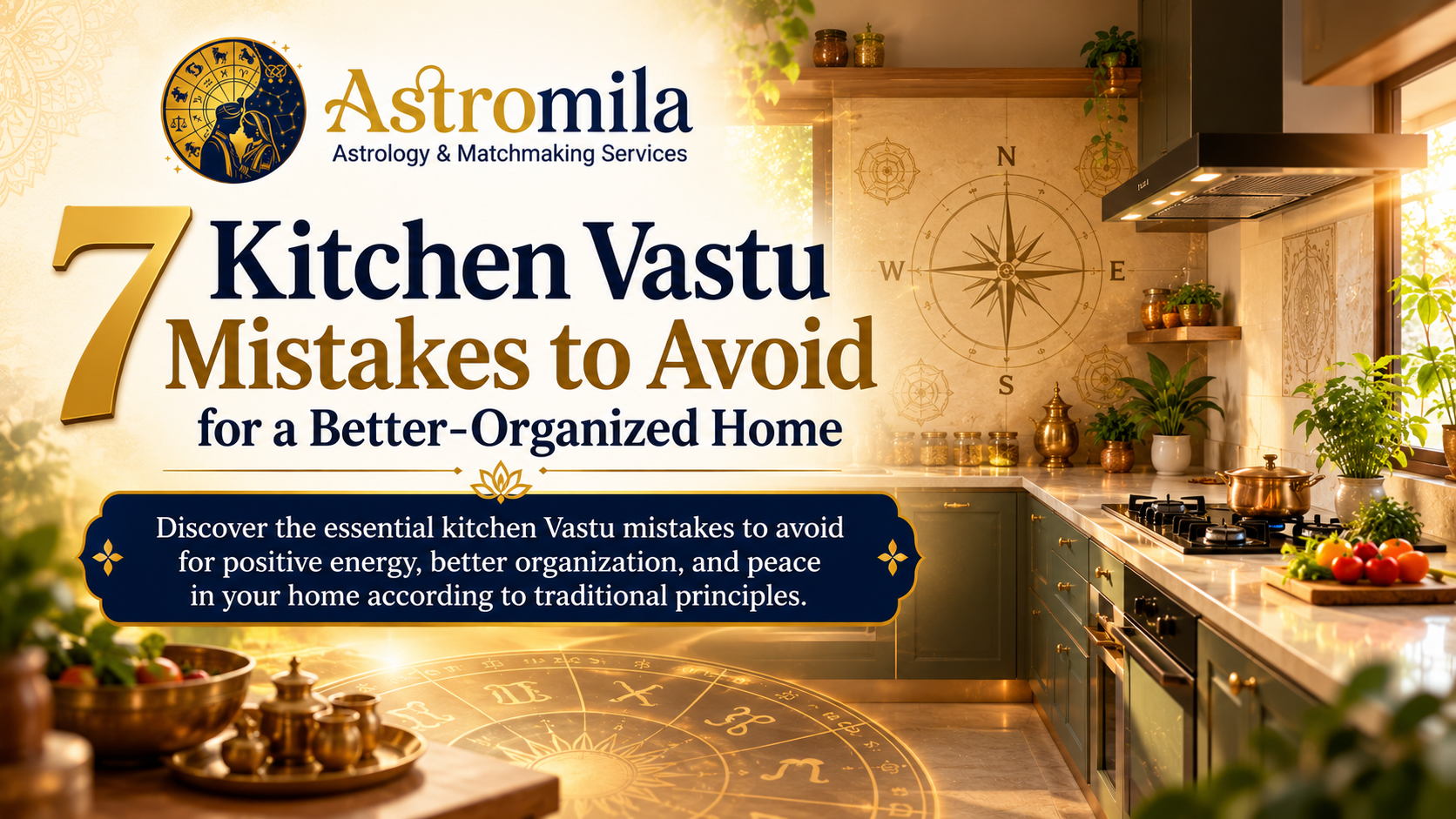
7 Kitchen Vastu Mistakes to Avoid for a Better-Organized Home
Discover the essential kitchen Vastu mistakes to avoid for positive energy, better organization, and peace in your home according to traditional principles.
7 Kitchen Vastu Mistakes to Avoid for a Better-Organized Home
When designing a modern living space in 2026, balancing aesthetic appeal with ancient spatial science remains essential for domestic harmony. Vastu Shastra, the traditional Indian system of architecture and spatial arrangement, emphasizes that every corner of a house radiates specific energies that directly influence the health, wealth, and mental peace of its occupants. Among all domestic zones, the kitchen holds a supreme position because it represents the element of fire and acts as the primary source of nourishment for the entire family. Navigating the complexities of spatial design requires careful planning, especially when looking at 7 Kitchen Vastu Mistakes to Avoid for a Better-Organized Home to ensure that positive energy flows freely without obstruction.
The kitchen is considered a sacred space in traditional wisdom, often associated with Agni, the fire deity. When spatial rules are overlooked, it can lead to chronic disorganization, financial friction, and a general sense of unease among family members. Understanding these common pitfalls allows homeowners to restructure their cooking spaces effectively, creating an environment that promotes both culinary efficiency and spiritual well-being. By aligning the physical layout with traditional spatial guidelines, households can experience greater clarity, improved vitality, and a more harmonious daily routine throughout the year.
Placing the Kitchen in the Incorrect Direction
One of the most fundamental errors homeowners make is constructing or setting up the kitchen in the wrong sector of the house. According to traditional spatial science, the ideal location for a kitchen is the southeast corner of the home, which is naturally governed by the fire element. Alternatively, the northwest corner serves as an acceptable secondary choice because it falls under the influence of the air element, which supports the movement of energy.
Placing the kitchen in the northeast corner is considered a severe architectural defect. The northeast zone is dedicated to water and spiritual energies, meaning that introducing a powerful fire element into this sacred space creates a direct elemental clash. Such a placement often leads to unexpected financial losses, mental distress among household members, and persistent health issues. Correcting this layout issue or utilizing appropriate color adjustments can help mitigate adverse energetic effects when structural changes are entirely impossible.
Incorrect Placement of the Stove and Sink
The eternal conflict between fire and water is a core principle in spatial arrangement that many modern interior designs overlook. The cooking stove represents the fire element, while the sink, water purifier, and washing machine represent the water element. Placing these two powerful, opposing elements directly adjacent to each other or directly facing one another creates an energetic friction that manifests as arguments and emotional instability within the family.
To maintain peace and balance, the stove should ideally be placed in the southeast direction, allowing the cook to face east while preparing meals. Meanwhile, the water sink ought to be positioned in the northeast or north zone of the kitchen, maintaining a safe and respectful distance from the cooking range. If kitchen dimensions are compact and separation is difficult, placing a wooden divider or a non-conductive partition between the stove and the sink helps neutralize the clash of elemental forces.
Storing Heavy Items in the Wrong Zone
Organization goes hand in hand with spatial energetics, particularly when it comes to the weight distribution of storage cabinets and kitchen supplies. Heavy storage items, such as large grain containers, heavy utensils, and surplus grocery stocks, should always be placed along the southern or western walls of the kitchen. These directions naturally support stability and heaviness, reinforcing a sense of grounded security.
Conversely, placing heavy storage units in the northern or eastern zones blocks the influx of light and subtle energies entering from those auspicious directions. The northern and eastern walls of the kitchen should be kept relatively light, airy, and uncluttered to encourage smooth financial growth and career opportunities. Maintaining an organized pantry where heavy items occupy the correct zones ensures that the home remains balanced and free from stagnant energetic blockages.
Poor Ventilation and Lighting Choices
A dark, stuffy, and poorly ventilated kitchen traps negative energies and accumulates airborne impurities that dampen the overall mood of the household. Natural light is a powerful cleanser in architectural science, bringing vitality and positive prana into the cooking area. Ignoring the need for adequate windows and exhaust systems leads to an accumulation of heavy, stale air that stifles enthusiasm and creativity.
The kitchen should feature large windows opening toward the east or north to welcome the morning sunlight and fresh breeze. Additionally, artificial lighting must be bright, warm, and evenly distributed, avoiding dark corners or shadowy alcoves where clutter tends to accumulate. Proper ventilation not only keeps the physical environment hygienic and pleasant but also ensures that the subtle energetic currents remain vibrant and uplifting for whoever is working in the space.
Using Negative Colors for Kitchen Walls
Color selection plays a profound psychological and energetic role in home design, yet many people choose shades based purely on modern minimalist trends without considering traditional principles. Dark, gloomy colors such as deep blues, heavy blacks, or aggressive reds should be strictly avoided on kitchen walls. Dark blue and black represent water, which suppresses the fire element of the kitchen, while excessive red can amplify anger, impulsiveness, and stress among family members.
Auspicious colors for the kitchen include soothing shades of white, light yellow, pale rose, or soft beige. These lighter hues reflect light effectively, promote cleanliness, and foster a peaceful atmosphere conducive to preparing wholesome meals. Incorporating subtle earth tones also helps ground the fiery energy of the space, creating a balanced visual and energetic environment that supports overall domestic harmony.
Improper Placement of Electrical Appliances
Modern kitchens rely heavily on a variety of electrical gadgets, ranging from refrigerators and microwaves to mixers and coffee makers. The placement of these heavy-duty appliances is critical in maintaining the energetic equilibrium of the room. Large electrical equipment that generates heat, such as microwaves and ovens, should ideally be placed in the southern or southeastern sector of the kitchen to align with the fire element.
On the other hand, the refrigerator represents cooling and preservation, making the southwest or northwest corner a more suitable location for it. Placing a refrigerator in the northeast can create unnecessary financial obstacles and disrupt the smooth flow of resources within the household. Organizing appliances according to their elemental nature ensures that the kitchen functions efficiently while respecting traditional architectural wisdom.
Neglecting Cleanliness and Clutter Accumulation
The final and perhaps most common pitfall involves allowing disorder, unwashed dishes, and expired food items to accumulate in the cooking space. A cluttered kitchen acts as a magnet for heavy, stagnant energy that directly impacts the health and prosperity of the residents. Leaving dirty dishes overnight in the sink is considered an invitation for financial scarcity and restless sleep patterns.
Maintaining rigorous standards of cleanliness, keeping countertops clear, and discarding stale or expired provisions on a regular basis revitalizes the domestic atmosphere. A clean, well-organized kitchen honors the nourishing aspect of the home and invites abundance, health, and mental clarity. By avoiding these 7 Kitchen Vastu Mistakes to Avoid for a Better-Organized Home, residents can cultivate a truly supportive living environment.
Frequently Asked Questions About Kitchen Vastu
Can the kitchen be located in the center of the house?
Placing the kitchen in the exact center of the home, known as the Brahmasthan, is strongly discouraged in traditional architecture. The center represents the navel of the house and must remain open, clean, and free from heavy structural elements or fire.
What should be done if the stove faces the main kitchen door?
Having the cooking stove directly aligned with the main entrance of the kitchen allows outside energies to interfere with the cooking process. If structural changes are impossible, hanging a traditional crystal or keeping a partition door closed while cooking can help correct the layout.
Is it acceptable to use black granite for kitchen countertops?
While black granite is a popular and durable material for modern countertops, traditional spatial guidelines suggest balancing it with lighter cabinets and wall colors. Introducing lighter elements helps neutralize the heavy, absorptive nature of dark stone surfaces.
Which direction should the cook face while preparing food?
The person cooking should ideally face toward the east while using the stove. Facing east allows the cook to absorb the positive morning solar energies, translating vitality and mindfulness into the meals being prepared.
As you continue exploring ways to harmonize your living space, remember that conscious organization creates lasting peace. We invite you to explore more astrology articles, spatial insights, and traditional wisdom guides available across Astromila.com to deepen your understanding of domestic alignment.