
 K
KAadi Velli Worship Method: Traditional Tamil Puja Rituals and Procedures
Learn authentic Aadi Velli puja steps, rituals, and worship methods for Tamil festivals and Jathagam compatibility guidance.
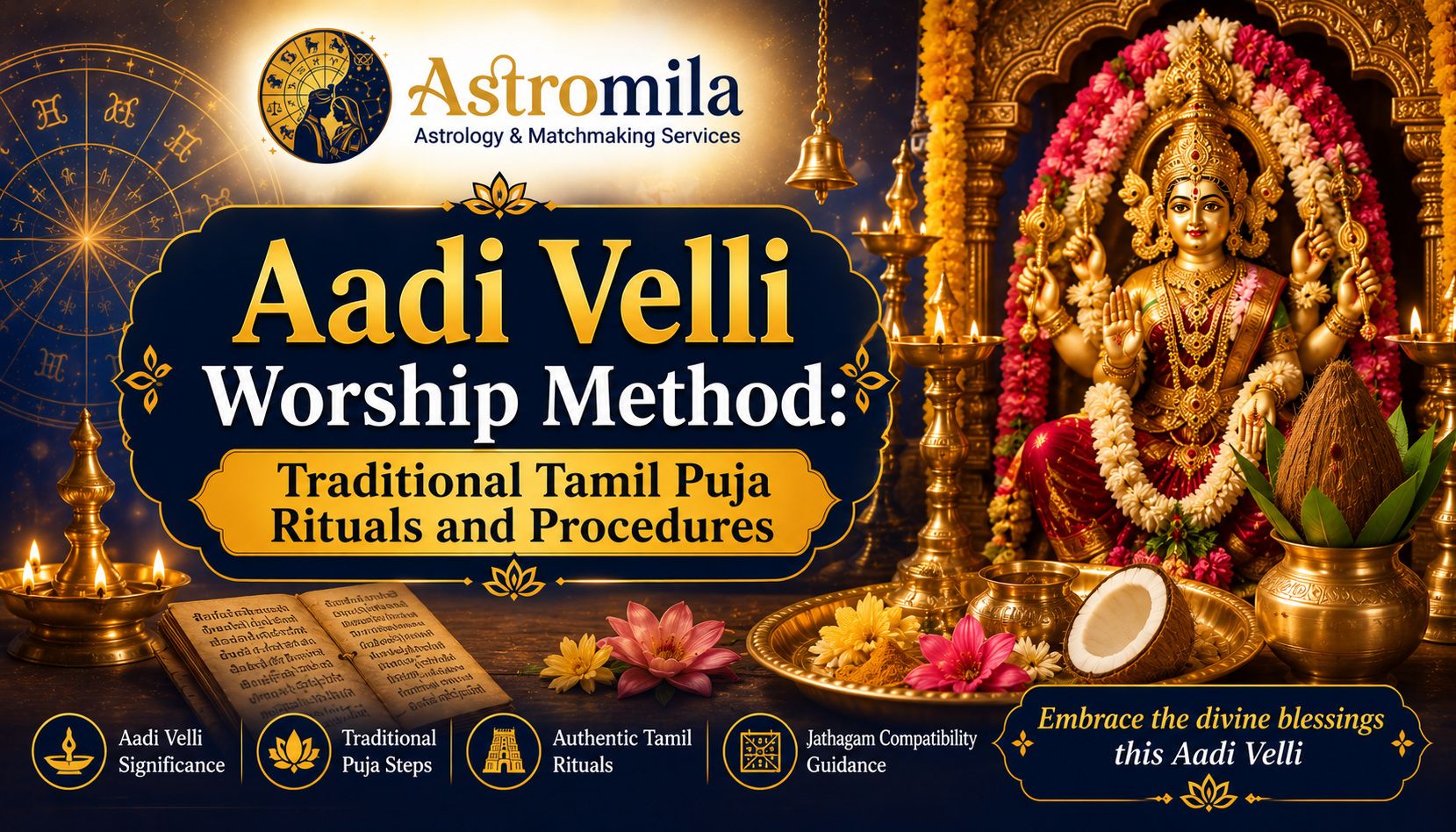
Aadi Velli Vazhibaatu Murai: The Sacred Friday Worship of the Aadi Month
The Tamil month of Aadi holds a place of immense spiritual significance in South Indian tradition. Among all the auspicious observances within this holy month, the Aadi Velli Vazhibaadu Murai stands out as one of the most powerful and time-honored worship practices dedicated to Goddess Amman and the planet Venus. Aadi Velli, meaning the Fridays occurring during the Tamil month of Aadi, are considered exceptionally potent days for invoking divine feminine energy, seeking blessings for marriage, prosperity, and family harmony. Devotees across Tamil Nadu and the Tamil diaspora observe these sacred Fridays with deep reverence, following rituals passed down through generations. Understanding the correct worship procedure — the Aadi Velli Vazhibaadu Murai — allows every devotee to connect meaningfully with divine grace during this auspicious window.
The Astrological Significance of Aadi Velli Vazhibaadu Murai
From a Jyotish perspective rooted in South Indian tradition, the Tamil month of Aadi corresponds to the solar transit through Kataka Rasi (Cancer) and into Simha Rasi (Leo). Friday, governed by Sukkirar (Venus), is the planet associated with beauty, love, fertility, and abundance. When Friday falls within the Tamil month of Aadi, the combination of solar energy and Venus energy creates a spiritually elevated atmosphere. The Aadi Velli Vazhibaadu Murai specifically harnesses this dual energy to invoke Goddess Amman in her most compassionate form. Josiyars and learned scholars of Tamil Jyotish have consistently recognized these Fridays as ideal Muhurtham windows for performing Amman worship, especially for women seeking marital harmony, fertility blessings, and household prosperity. The Jathagam (Jathaka) of individuals born under Venus-dominant nakshatra placements tend to receive amplified benefits from sincere observance of this ritual.
The Nakshatras and Planetary Alignments That Enhance This Worship
Among the 27 nakshatras recognized in Tamil Jyotish, those governed by Sukkirar — namely Bharani, Pooram, and Pooradam — are considered especially responsive during Aadi Velli observances. Devotees born under these nakshatras are strongly encouraged to perform the Aadi Velli Vazhibaadu Murai with full devotion. Additionally, individuals currently experiencing Sukkirar dasa within the 120-year Vimshottari dasa cycle can derive particular benefit from these worship practices. The positioning of Saturn during Aadi months also plays a role — those experiencing Sade Sati, the seven-and-a-half-year Saturn transit period, are advised by traditional Josiyars to observe Aadi Velli rituals for relief and divine protection. The 12 rasis all receive different levels of blessings depending on the current planetary configurations, making consultation with a knowledgeable Josiyar an advisable step before beginning the ritual.
Step-by-Step Guide to the Aadi Velli Vazhibaadu Murai
The correct observance of Aadi Velli Vazhibaadu Murai follows a disciplined ritual framework. Devotees are advised to wake before sunrise, take a ritual bath, and wear clean traditional attire — preferably yellow or red, colors associated with divine feminine power. A simple altar or visit to the nearest Amman temple forms the centerpiece of the observance. Offerings include fresh flowers — particularly red lotus, marigold, and jasmine — along with turmeric, kumkum, sweet pongal, and coconut. Lighting a pure sesame oil lamp or ghee lamp is considered essential, as the lamp symbolizes the illumination of Sukkirar's positive energy. Chanting traditional Amman sthothrams and Thirupugazh hymns during the worship elevates the spiritual quality of the ritual. Completing the ritual before noon is advised to align with Nalla Neram, the auspicious time windows identified for that specific Friday.
Dietary Observances and Vratha Rules
Traditional practice requires those observing Aadi Velli Vazhibaadu Murai to maintain a vegetarian diet on that day, abstaining from meat, alcohol, and tamasic foods. Some devout practitioners observe a partial fast, consuming only fruits and milk until after the evening worship is completed. Salt avoidance is also recommended in certain regional traditions, particularly in Kongu Nadu and Cauvery Delta communities where this practice has deep roots. The Vratha should ideally begin from the first Aadi Velli and be observed continuously across all Fridays falling within the Aadi month, forming an unbroken chain of devotion. Josiyars emphasize that consistency of observance carries more spiritual weight than elaborate but irregular rituals.
Benefits of Observing This Sacred Practice in 2026
In 2026, the Tamil month of Aadi brings renewed spiritual opportunity for devotees seeking divine blessings. The planetary configurations during Aadi 2026 make the Aadi Velli Vazhibaadu Murai especially significant for individuals seeking marriage compatibility alignment, resolution of Porutham-related concerns through Dasa Porutham analysis, and overall family prosperity. Families navigating delayed marriages are particularly encouraged to observe these Fridays with sincerity, as the combined energy of Aadi and Sukkirar is believed to open auspicious pathways.
Frequently Asked Questions
What is the meaning of Aadi Velli Vazhibaadu Murai? It refers to the systematic worship procedure observed on Fridays during the Tamil month of Aadi, primarily devoted to Goddess Amman and honoring the planet Sukkirar (Venus).
How many Fridays typically fall in the Tamil month of Aadi? The Tamil month of Aadi spans approximately 30 days, so typically four or five Fridays occur within this sacred month depending on the calendar year.
Can men also observe Aadi Velli worship? Yes, while this tradition is especially popular among women, men seeking blessings of prosperity, harmony, and Sukkirar-related benefits may also observe the Aadi Velli Vazhibaadu Murai with full devotion.
Is temple worship mandatory for Aadi Velli? Temple worship is highly recommended for the fullest benefit, though sincere home worship conducted following the correct Vazhibaadu Murai is also considered valid and spiritually effective.
Should I consult a Josiyar before beginning this Vratha? Consultation with a qualified Josiyar is always beneficial, particularly to identify your Jathagam's specific planetary periods and determine the most effective worship approach for your personal circumstances.
Conclusion
The Aadi Velli Vazhibaadu Murai represents one of the most beautiful intersections of Tamil calendar wisdom, Jyotish knowledge, and living devotional tradition. By observing this sacred practice with sincerity, consistency, and respect for traditional guidelines, devotees align themselves with powerful cosmic and divine energies that support prosperity, marital harmony, and spiritual well-being. As 2026 brings its own unique planetary alignments, this is an ideal year to begin or deepen your observance of the Aadi Velli Vazhibaadu Murai. For personalized Jathagam analysis, Dasa Porutham compatibility assessments, and guidance on auspicious Muhurtham timing for your specific needs, visit Astromila.com — your trusted companion in authentic South Indian Jyotish wisdom.