
 K
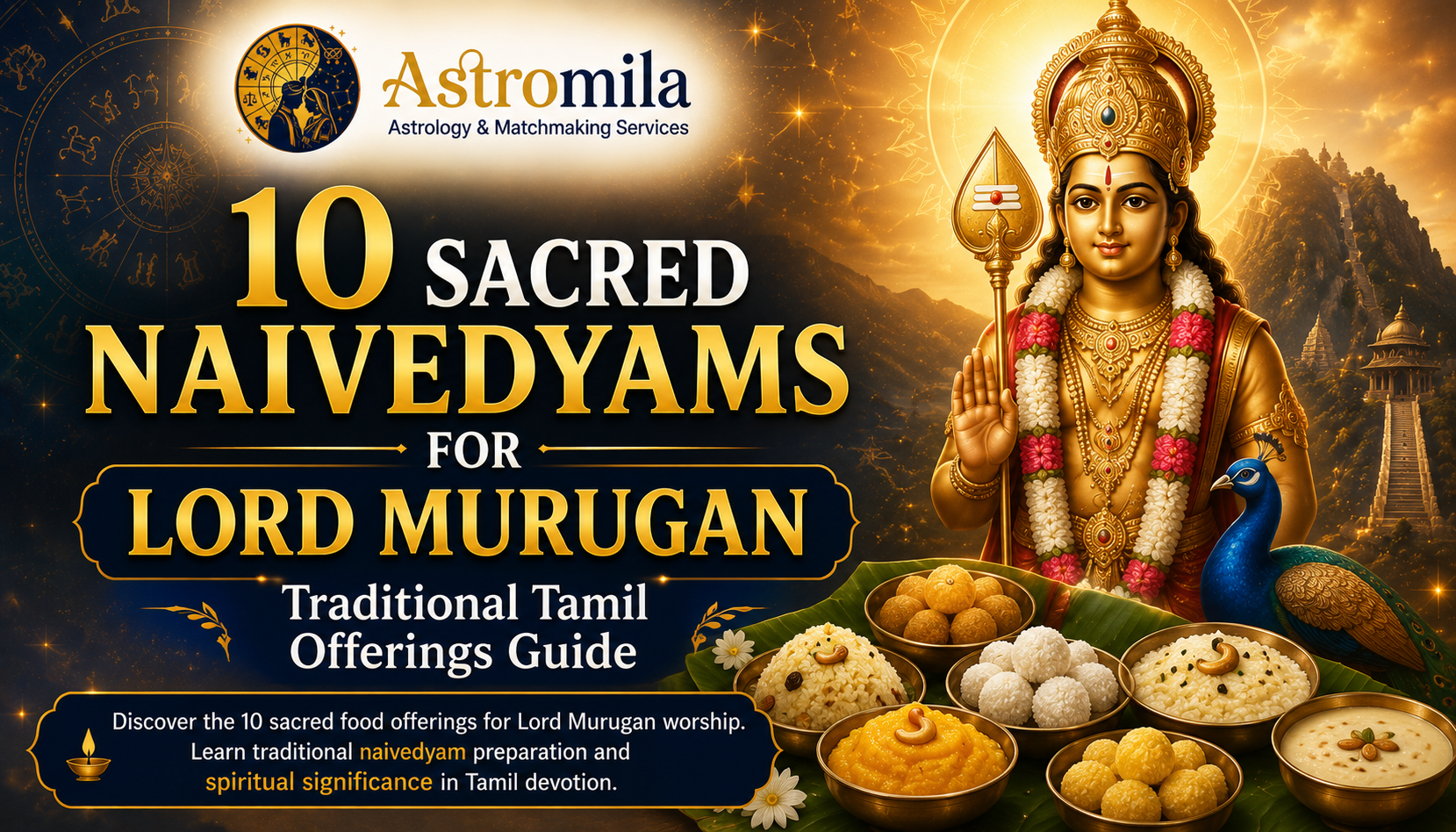
K10 Sacred Naivedyams for Lord Murugan - Traditional Tamil Offerings Guide
Discover the 10 sacred food offerings for Lord Murugan worship. Learn traditional naivedyam preparation and spiritual significance in Tamil devotion.
Muruganukku Padaikka Vendiya 10 Naivedyangal Enna? The Sacred Offerings That Transform Your Devotion
Introduction: The Divine Hunger of Lord Murugan
Lord Murugan, the radiant son of Shiva, the commander of celestial armies, the wielder of the sacred Vel — He is not merely a deity. He is the living force of grace, wisdom, and spiritual victory that pulses through every sincere heart that calls upon Him. Across Tamil Nadu and beyond, millions of devotees ask with genuine longing: what are the 10 sacred naivedyangal that should be offered to Lord Murugan to deepen devotion and invite His blessings? The answer is not merely a list of food items. It is a sacred theology of offering, a philosophy of surrender, and a practice that transforms the devotee from the inside out. As we enter 2026, let this guide awaken your worship to its highest and most meaningful form.
What Is Naivedyam and Why Does It Matter in Murugan Worship?
Naivedyam is the sacred act of offering food to the divine before consuming it yourself. It is rooted in the ancient Agamic tradition that recognizes the divine presence as real, living, and present — not symbolic. When you offer food to Murugan, you are declaring through action that He is the one who truly sustains all life. The food you offer carries your intention, your love, and your surrender. Tamil Saivite tradition teaches that the Lord first accepts the fragrance, the devotion, and the pure heart behind the offering. The physical item is secondary to the internal quality of the giver. This understanding separates mechanical ritual from genuine Bhakti. In 2026, as spiritual seekers grow more thoughtful in their practice, understanding the deeper meaning of each naivedyam becomes not just useful but essential to authentic worship.
The 10 Sacred Naivedyangal That Murugan Loves: Muruganukku Padaikka Vendiya 10 Naivedyangal Enna?
This is the heart of our sacred inquiry. The following ten offerings carry both traditional authority and deep spiritual symbolism. Each one has been revered in Tamil Saivite practice for centuries.
1. Panchamirtham — The divine mixture of banana, honey, ghee, sugar, and milk. This offering appears in Murugan temples across Tamil Nadu and represents the five forms of sweetness in life. It is considered among the most auspicious naivedyams.
2. Kozhukattai — These steamed rice dumplings made with jaggery and coconut filling are beloved by Murugan and are traditionally offered on Skanda Sashti and auspicious Karthigai days.
3. Vella Aval — Beaten rice sweetened with jaggery and grated coconut. This simple offering symbolizes purity and humility. What is simple and heartfelt is always accepted by the Lord.
4. Sarkarai Pongal — Sweet rice cooked with jaggery, ghee, and cashews. This naivedyam carries the energy of abundance, prosperity, and gratitude, making it deeply appropriate for Murugan who bestows blessings upon His devotees.
5. Kavuni Arisi Payasam — Black rice kheer cooked with coconut milk and jaggery. This is a sacred offering deeply connected to Tamil culinary heritage and is believed to be especially pleasing to the Lord.
6. Idiyappam with Coconut Milk — String hoppers made from rice flour, offered with sweetened coconut milk. This delicate offering reflects the fine, intricate nature of devotion itself — patient, careful, and lovingly prepared.
7. Banana Offering — The simple banana, especially the nendran variety, is considered one of Murugan's favorite fruits. Offering a bunch of bananas with sincere prayer carries tremendous merit in Tamil devotional practice.
8. Nei Appam — Deep-fried rice flour dumplings made in ghee with jaggery and banana. This traditional sweet is prepared in Tamil homes during Karthigai Deepam and is considered highly auspicious for all forms of Murugan worship.
9. Coconut and Fruits — A whole coconut broken before the deity, offered alongside seasonal fruits, symbolizes the breaking of one's ego before the Lord. The fruit represents the ripening of the soul through devotion.
10. Milk Abhishekam Prasad — Milk used in the sacred abhishekam of Murugan's idol, when collected and consumed as prasad, is itself a form of naivedyam returned by the Lord. Offering fresh milk for abhishekam and receiving it back as divine grace completes a sacred circle of worship.
The Spiritual Philosophy Behind Each Offering
Every ingredient tells a story. Jaggery represents sweetness without artificiality — the pure, unrefined nature of devotion. Ghee represents the clarity of a refined mind, one that has been heated by spiritual discipline and purified of impurities. Coconut, with its hard outer shell and white inner flesh, is the soul veiled by ego, cracked open before the Lord in total surrender. Rice, the staple of Tamil life, represents our most essential sustenance offered back to the One who provides all sustenance. When you understand these layers of meaning, every act of offering becomes an act of meditation. You are not feeding a stone idol. You are expressing in edible, physical form your deepest theological understanding: that everything comes from Him, and everything must return to Him in gratitude.
How to Offer Naivedyam to Murugan With Proper Devotion
The preparation of naivedyam must begin with a clean body and a settled mind. Bathe before entering the kitchen where you will prepare the offering. Maintain silence or chant Murugan's names as you cook. Do not taste the food before offering it to the Lord. Place the offering on a clean banana leaf or plate, light an incense stick and a lamp, and present it before Murugan's image or idol with folded hands. Recite a simple prayer or the Kanda Sashti Kavasam with sincerity. Leave the offering for a few minutes, then take it as prasad. This sequence matters because it transforms cooking into sadhana, preparation into prayer, and the kitchen into a temple. In 2026, with so many seeking tangible spiritual practices, this method offers a grounded, daily form of devotion that connects heaven and earth.
Frequently Asked Questions
Q: Can naivedyam be offered at home or only in temples? Naivedyam is absolutely appropriate for home worship. In the Tamil tradition, the home itself is a sacred space, and Lord Murugan's presence is not limited to temple walls. A sincere heart and a clean space are sufficient.
Q: How many times per week should one offer naivedyam to Murugan? There is no strict minimum. Tuesdays and Fridays are considered especially auspicious for Murugan worship in Tamil tradition. Karthigai Nakshatra days each month are also highly favorable for naivedyam offerings.
Q: Is it necessary to offer all 10 naivedyangal at once? No, it is not necessary to offer all ten simultaneously. Even a single banana or a small bowl of pongal offered with complete sincerity is fully accepted. Devotion, not quantity, is what reaches the Lord.
Q: Can non-vegetarian food be offered to Murugan? In the mainstream Agamic Saivite tradition, Murugan worship uses only sattvic, vegetarian offerings. Stick to the traditional vegetarian naivedyams described above for conventional worship.
Q: What is the best time to offer naivedyam? Morning hours before sunrise or during sunrise are considered most auspicious. Evening worship during the lamp-lighting hour of dusk is also particularly sacred in Tamil devotional practice.
Conclusion: Let Your Offering Be Your Prayer
The question of muruganukku padaikka vendiya 10 naivedyangal enna is not simply a question about food. It is a question about relationship — your relationship with the divine, with tradition, and with your own deeper self. Each offering you place before Murugan is a statement: I recognize you as the source of all sweetness, all sustenance, all grace. May every plate you prepare become a prayer, may every prayer become a transformation, and may every transformation bring you closer to the radiant light of the Vel. For deeper insights into Tamil astrology, auspicious timings, nakshatra-based worship, and personalized spiritual guidance, visit Astromila.com — where ancient Tamil wisdom meets your modern spiritual journey.